A Guide to the Field contributing artists:
Barbara Botting / David Brooks / Jorge Colombo / Mark Dion / Carla Duarte / Hope Ginsburg / Gary Graham / Brooke Grant / Heather Greene / Jeffrey Jenkins / Cameron Klavsen / Abby Lutz / Kristyna & Marek Milde / Garnett Puett / J. Morgan Puett / Rebecca Purcell / Rodolfo Salgado, Jr. / Gina Siepel / Laura Silverman / Matthew Solomon / Allison Smith / Caroline Wallner / Allison Ward / Natalie Wilkin / Caroline Woolard / Amy Yoes / Mary Lou Zelazny / Jim Zivic /
TOPIC ARCHIVE
December 7 - 2019
Past Topic / Science Fictional Thinking
Cocurated with Alex A. Jones and Cameron Klavsen
It is the year 2020. You are living in the future, and it is nothing like you imagined.
This show asks how science fiction can be a tool for artists to anticipate meaningful notions of the future. Sci-fi is not simply a genre, but a vehicle for expressing collective dreams and fears about our ever-changing world. Nor are the aesthetics of sci-fi limited to the space age, for we do not seem destined for a future of technological salvation. The varied works in this exhibition are therefore grounded in trans-historical thinking. They are imaginative leaps, speculative propositions, compromises, and even fantasies. The curatorial premise of their grouping is this:
Imagine a future world...what object sits beside you? If sci-fi is a tool for thought, what does that tool look like?
Vincent Castro / Jorge Colombo / Mark Dion / Joy Feasley / Hope Ginsburg / Norberto Gomez / Heather Greene / Jeffrey Jenkins / Alex A. Jones / Cameron Klavsen / Abby Lutz / Kristyna Milde / Marek Milde / J Morgan Puett / Rebecca Purcell / Ryan Rennie / Alexander Rosenberg /Alex Schechter / Matthew Solomon / Paul Swenbeck / VIROSA / Allison Ward / Natalie Wilkin / Amy Yoes
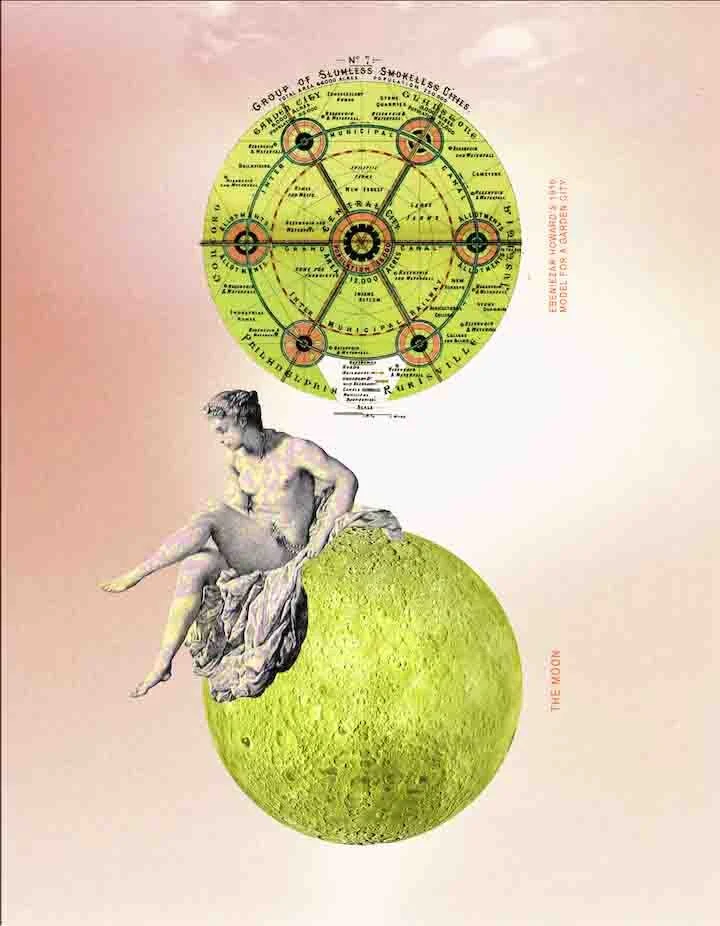
Image: Alex A. Jones and Cameron Klavsen
\August 10- november 24 2019 /
Past Topic /
Phallacies /
CoCurated by Leigh Claire La Berge, Caroline Woolard, and Paige Landesberg.
Featuring objects and texts by artists, collectives, and cultural workers:
Charlie Adams / Liz Barr / David Brooks / Cameron Clayborn / Jorge Colombo / Mira Dayal / Oliver Davidson / Mark Dion / Ivana Dizdar / Daria Dorosh / GenderFail / Heather Greene / Jeffrey Jenkins / Jon Kessler / Nancy Kim / Leigh Claire La Berge / Paige Landesberg / Pixy Liao / Aimee Lin / Samantha Lopez / Tora López / Abby Lutz / Sariah Park / Rebecca Purcell / J. Morgan Puett / Rodolfo Salgado, Jr. / Gina Siepel / Matthew Solomon / Allison Smith / Josh Tucker / Caroline Wallner / Allison Ward / Natalie Wilkin / Caroline Woolard / Joshua Wright / Amy Yoes / Jim Zivic /
A Guide to the Field presents Phallacies, a show that represents the nuance of sex, possibility and power. Featuring a diverse range of works, Phallacies outlines the relationship between art practice and sexual practice. Taking its cue from queer and trans critiques of the body, embodiment, desire and despair, Phallacies asks: how do changing instruments for and representations of sex pose both an opening and a site of longing?
A fallacy is an incorrect assertion, but, according to Jacques Lacan, so is a phallus. It is always an object of fantasy, of imagination, of a lack of having and a desire to have more. No one really has one. But everyone might.
If we accept the radical imperative that gender needs to be undone, or the even more radical understanding that it has been undone, then what sex toys will we use? This is not a small question. Gender and sexuality are composed of a mix of fantasy and reality, history and presents. One thing we do know, however, is that gender can change because it has changed.
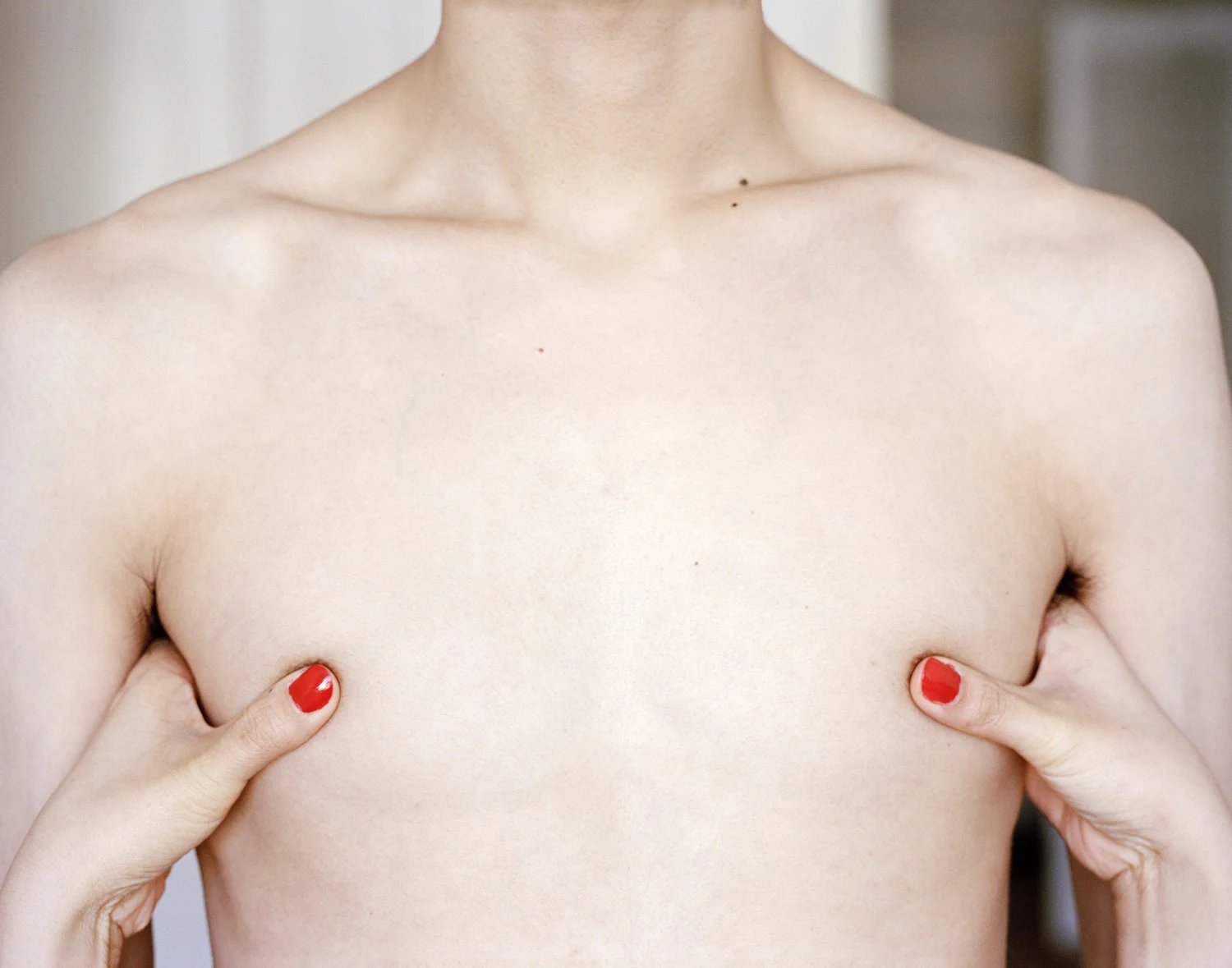
Image: Pixy Liao, Play Station
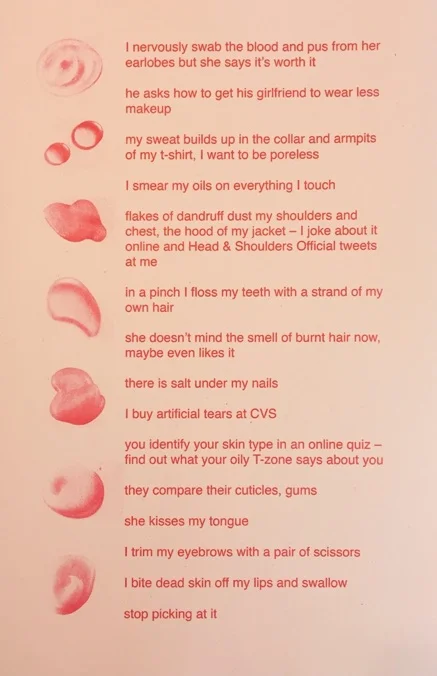
Image: Liz Barr, Get Me Embodied
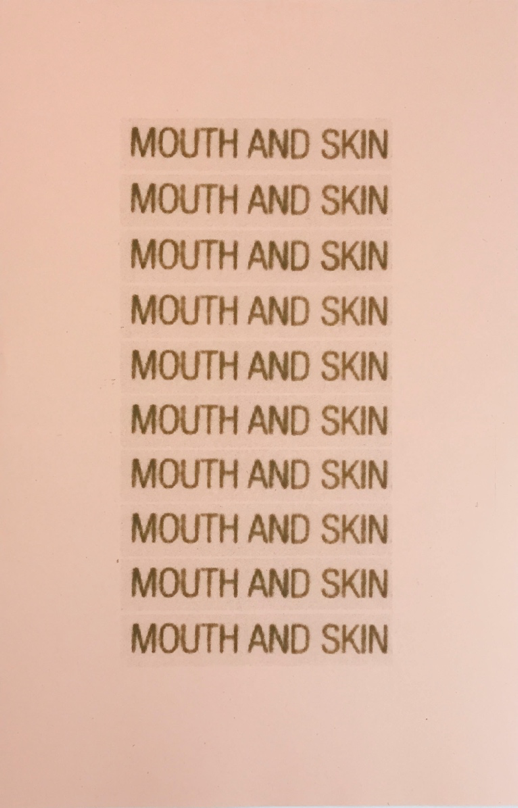
Image: Liz Barr, Mouth and Skin
April - July 2019 /
Past Topic /
Factory /
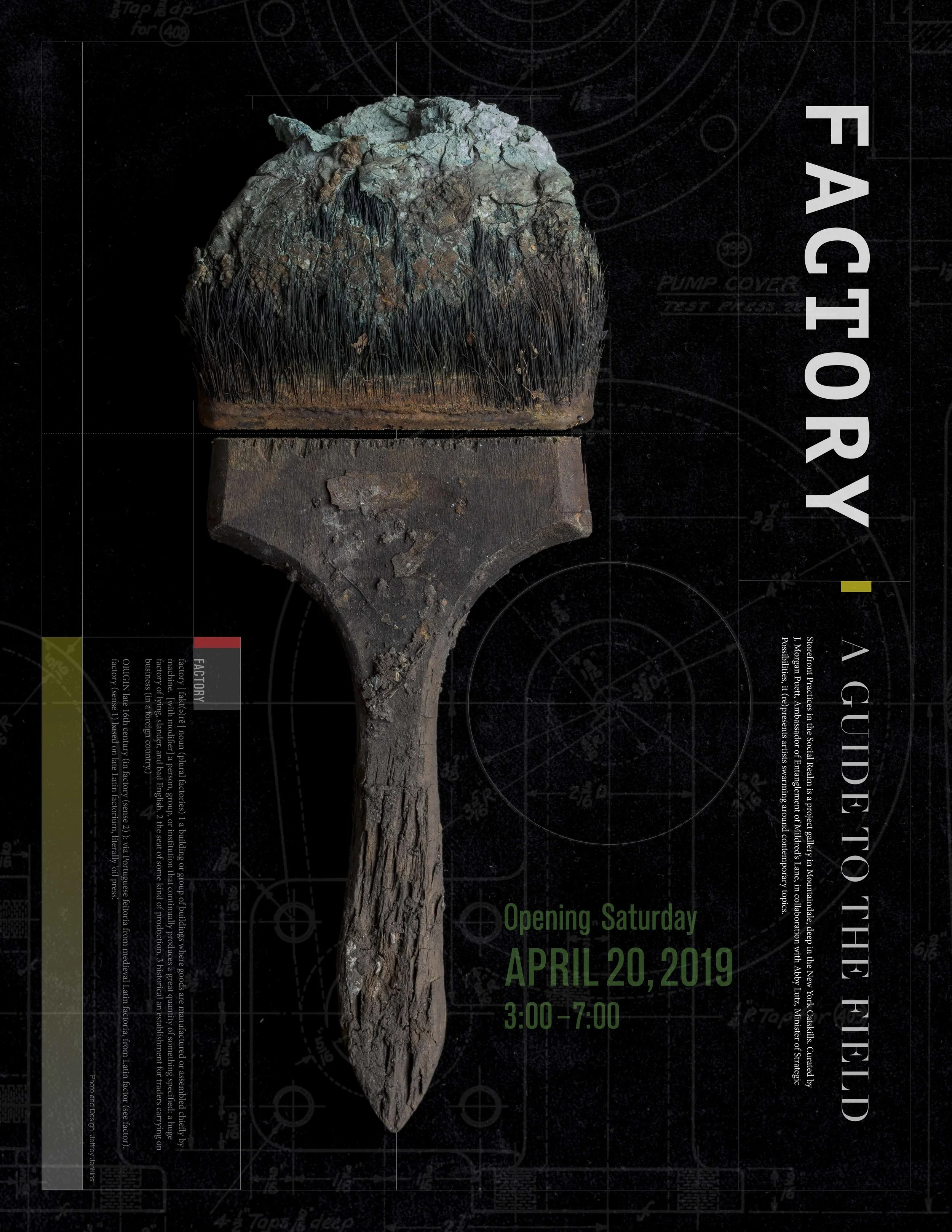
Factory ˈfakt(ə)rē noun 1) a building or group of buildings where goods are manufactured or assembled chiefly by machine. 2) A manufacturing plant is a site, with machinery, or a complex, where workers manufacture goods, operate machines processing materials into another form or products.3) [with modifier] a person, group, or institution that continually produces a great quantity of something specified: a huge factory of lying, slander, and bad English. 4) Historical; an establishment for traders carrying on business.
Factory is a show hearkening to earliest sites of production – the household – evolving into what we understand as the industrial revolution; on to the rapid evaporations of a technological 21st-century. Here, artists are factories, as if coming full circle. Creative workers and thinkers tell stories, weave histories, sport reflections, make demonstrations, share collections, manufacture clothing and hold events throughout the spring exhibition.
New FEATURE
One Grand Books
Our reading room has expanded from the under-the-stairs space into a factory lounge; in residence, One Grand Books / Aaron Hicklin, stitched with Mildred's Lane characters.
October 2018 - February 2019 /
Past Topic /
Encampment /
With David Brooks / Jorge Colombo / Barbara de Vries / Mark Dion / Hope Ginsburg / Gary Graham / Brooke Grant / Jeffrey Jenkins / Alex A. Jones / Cameron Klavsen / Leigh Claire La Berge / Abby Lutz / Kristyna & Marek Milde / J. Morgan Puett / Rebecca Purcell / Gina Siepel / Shelley Spector / Allison Smith / Caroline Wallner / Allison Ward / Natalie Wilkin / Caroline Woolard / Amy Yoes //
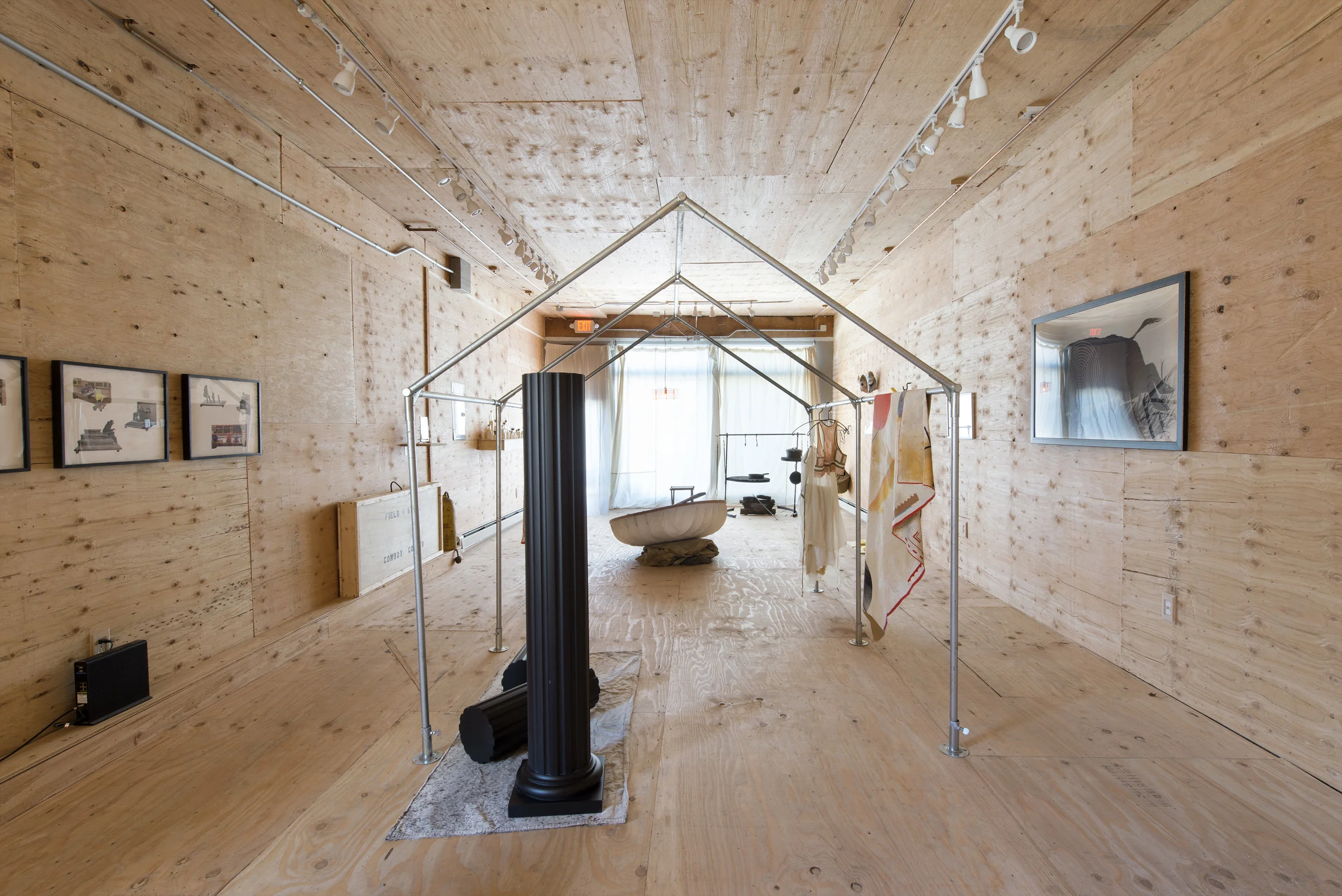
Encampment / inˈkampmənt, enˈkampmənt (noun) / A place with temporary accommodations consisting of huts or tents, typically for troops or nomads. / The process of setting up a camp. Migrants, refugees, nomads, displaced beings both human and non-human, everywhere, removed from _ re-establishing home. / Migrating into a community with finite, temporary, active engagement.
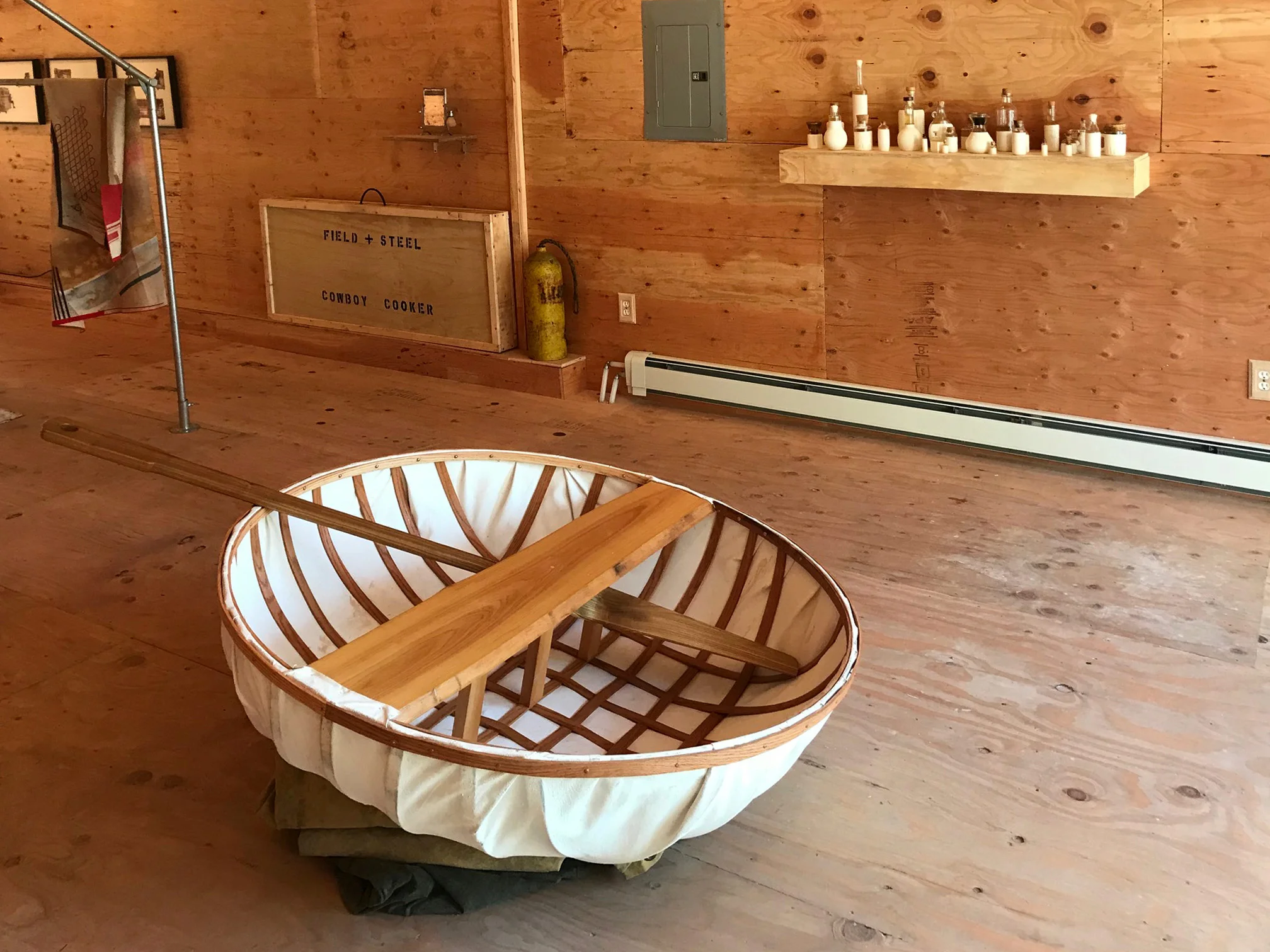
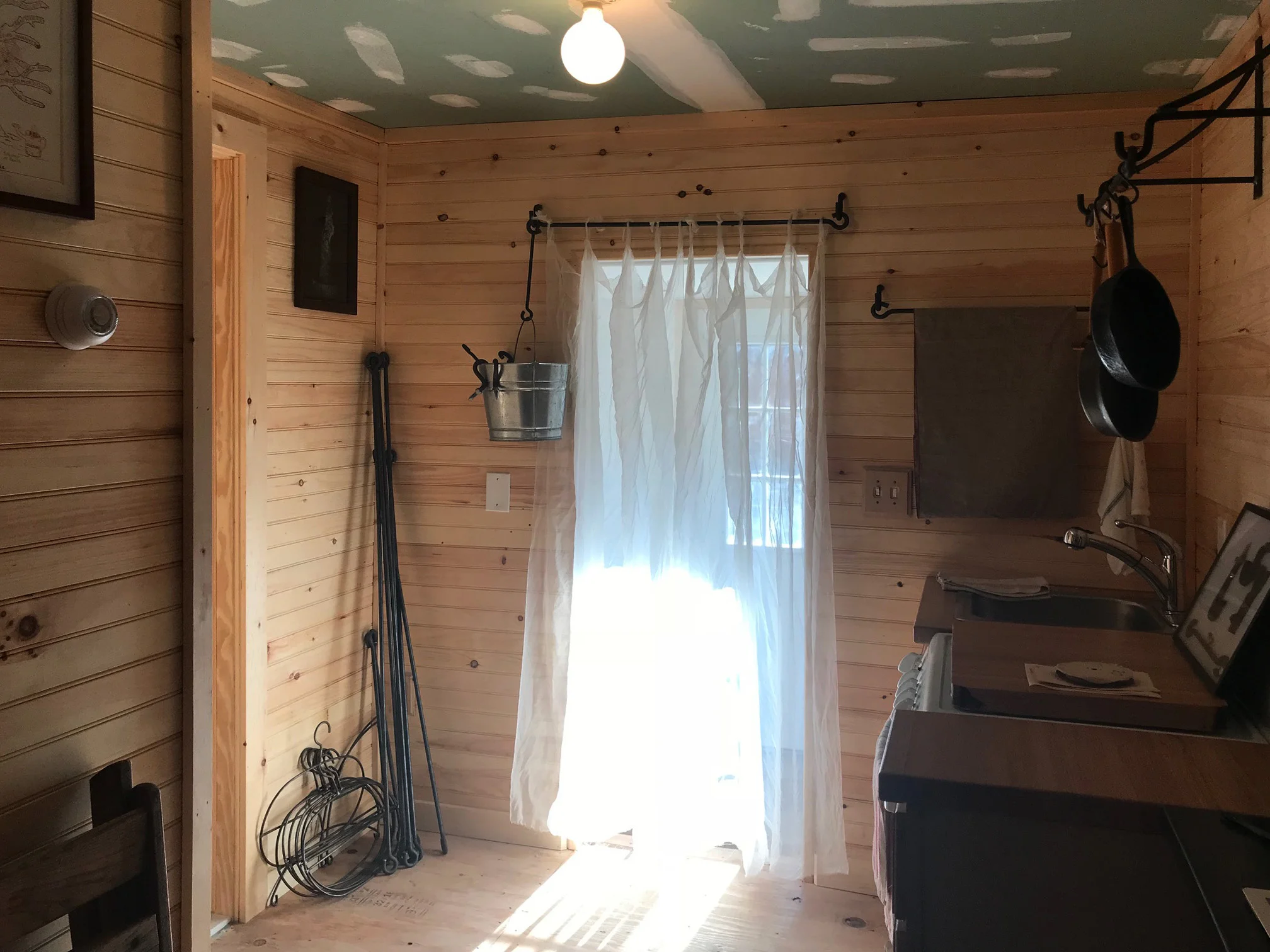
Encampment, A Guide to the Field's inaugural exhibition, was an installation collection of conceptual products that offer expanded possibilities of comfort, camping, modern life, and shifting notions of home in an ever-migratory society. From stained linen textiles to recycled soaps, from she-wolf tables to U&I wall-and-ceiling systems, visitors to the project gallery were offered materials and ideas to enhance domestic activities of resting, cooking, cleaning, and playing-being.
These artists are creating handmade protestations against traditionally predetermined domesticity; they are makers reassembling the terms of conceptual artworks we might actually need for the 21st century. The shared goal is to rethink the ethics of comportment, commons, comfort, environment, reassembling the terms by which we define sites with social, political, and civic possibilities.